Sicily, the Mediterranean’s largest island, is a treasure trove of history and culture. For centuries, it stood at the crossroads of ancient civilizations, shaped by the Greeks, Romans, Phoenicians, Byzantines, and Arabs, among others. This rich cultural melting pot left behind some of the most extraordinary ancient landmarks in the world. Today, these sites offer a window into the island’s fascinating past, showcasing its role as a beacon of art, architecture, and innovation.
From soaring Greek temples that defy time to intricate Roman mosaics that whisper stories of a bygone era, Sicily’s ancient wonders are breathtaking in both their scale and their storytelling. This guide reveals three must-visit sites that embody the island’s ancient legacy, each transporting visitors deep into history while highlighting Sicily’s timeless allure.
The Valley of the Temples in Agrigento
A Journey Through the Heart of the Greek World
The Valley of the Temples, located in Agrigento, is one of the most significant Greek archaeological sites in the world. Stretching across a scenic ridge overlooking the Mediterranean Sea, this UNESCO World Heritage Site is a stunning collection of Doric temples, sanctuaries, and ancient ruins. It stands as a testament to the grandeur of ancient Greek civilization, blending architecture, religion, and artistry in an awe-inspiring way.
Agrigento, founded as Akragas in 580 BCE by Greek settlers from Rhodes and Crete, was once a thriving city-state and a hub of trade and culture. Known as the “most beautiful city of mortals” by the Greek poet Pindar, the city was decorated with opulent temples and statues that reflected its wealth and devotion to the gods.
The Magnificent Temples
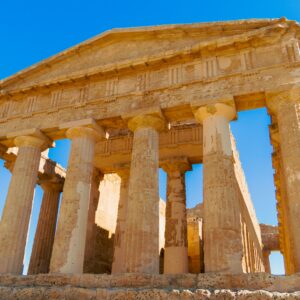
The crown jewel of the Valley of the Temples is the Temple of Concordia, one of the best-preserved Greek temples in the world. Constructed around 440 BCE, it is named after the Roman goddess Concordia, though its original dedication remains a mystery. The temple’s symmetrical columns, sturdy pediments, and harmonious proportions embody the pinnacle of Doric architecture.
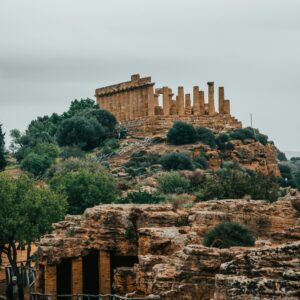
Nearby, the Temple of Hera (Juno) offers a more romantic, weathered charm. Perched on a hill, it once served as a sacred site for worship and marriage ceremonies. Although partially ruined, its still-standing columns and dramatic location make it a photographer’s dream.
The Temple of Zeus (Olympieion), though in a more fragmented state, is extraordinary in its sheer scale. Built to honor Zeus, the king of the gods, this temple was the largest Doric temple in ancient Greece. Measuring nearly 112 meters long and 55 meters wide, with colossal carved figures (called Telamons) supporting its structure, it showcases the ambition and capabilities of the ancient architects.
Why Visit
The Valley of the Temples isn’t just an architectural marvel; it’s an immersive experience. Walking among these ancient ruins, you’ll feel the vibrations of history come to life. At dusk, the temples, bathed in golden light, exude an almost ethereal beauty. The verdant olive groves and almond trees that surround the site add to its timeless, almost magical atmosphere.
For visitors, it’s an opportunity to reflect on how these ancient innovations continue to inspire architectural feats today. Every stone tells a story of human endeavor, resilience, and a civilization’s quest to honor the divine.
The Roman Mosaics of Piazza Armerina
A Glimpse into Roman Luxury
Nestled in central Sicily is the small town of Piazza Armerina, home to one of the most impressive collections of Roman mosaics in the world. The Villa Romana del Casale, another UNESCO World Heritage Site, is a magnificent Roman villa dating back to the 4th century CE. Its extensive and intricately detailed mosaics depict scenes of everyday Roman life, mythology, hunting, and entertainment.
Awealthy Imperial Retreat
Believed to have belonged to a wealthy Roman aristocrat, the villa was more than just a residence; it was an extravagant retreat that demonstrated the owner’s immense wealth and sophistication. The villa’s layout includes grand reception halls, thermal baths, private living quarters, and a stunning peristyle garden courtyard, all expertly designed to cater to the Roman elite’s luxurious lifestyle.
Masterpieces in Stone
The true highlight of the villa lies beneath its expertly reconstructed roofs. Stretching more than 3,500 square meters, the mosaics are an extraordinary example of Roman craftsmanship and artistry. The Hall of the Great Hunt, perhaps the most famous mosaic, illustrates exotic animals being captured and transported across the sea, offering a glimpse into Rome’s far-reaching empire. The vibrant hues and precise details of the scene are striking even today.
Another captivating mosaic is the so-called “Bikini Girls” fresco, which depicts young women in what appears to be bikini-like garments, competing in athletic games. This playful yet realistic work provides rare insight into leisure activities and fashion trends of ancient Roman society.
Why Visit
The mosaics of Piazza Armerina are more than beautiful artworks; they’re windows into the soul of Roman culture. Whether it’s the intricate patterns of flora and fauna or the grand depictions of mythological epics, every mosaic piece tells a story of opulence, spirituality, and the human experience. This villa’s uniqueness lies in its ability to transport visitors to a specific moment in time, where they can imagine the vibrant life of ancient Rome blooming before their eyes.
Teatro Greco in Taormina
A Stage with a View
High above the shimmering waters of the Ionian Sea, perched on a hillside surrounded by the dramatic backdrop of Mount Etna, sits the Teatro Greco in Taormina. Built in the 3rd century BCE by the Greeks and later expanded by the Romans, it remains one of the most breathtaking ancient theaters in the world. Its strategic location and impeccable acoustics highlight the architectural genius of ancient civilizations.
A Confluence of Greek and Roman Ingenuity
Initially designed for Greek drama and performances, the Teatro Greco showcases the signature semicircular seating arrangement, or theatron, that leverages natural landscapes to maximize audience views. During Roman rule, the theater was modified to accommodate gladiatorial events and public spectacles, which required more advanced engineering capabilities.
Today, visitors can marvel at the fusion of Greek and Roman architectural styles that coexist harmoniously. The orchestra, once a sacred space for Greek performances, transitioned into a Roman arena for entertainment purposes, symbolizing the cultural evolution of the theater over centuries.
A Cultural Haven
The Teatro Greco is a living testament to Sicily’s rich cultural legacy. It continues to be a venue for concerts, operas, and theatrical productions, breathing new life into a space steeped in history. Audiences today enjoy performances under the same skies that watched over ancient spectators, creating an emotional connection between past and present.
Why Visit
Visiting the Teatro Greco is not only an exploration of architectural brilliance but also an emotional experience. The sweeping views of Mount Etna and the glittering coastline below add another layer of drama to the theater’s historical significance. Whether sitting among the ancient stone seats imagining a Greek tragedy unfolding or attending a modern-day performance with the stars above, this site is a perfect blend of history and beauty.
Sicily’s Role as a Crossroads of Civilizations
What makes Sicily’s ancient wonders so unique is their ability to tell a story beyond the surface. Each site highlights the island’s role as a crossroads for civilizations that passed through its shores. The Greeks brought their advanced urban planning and artistic ideals, shaping cities like Agrigento and Taormina. The Romans, with their engineering mastery, introduced aqueducts, baths, and mosaics that showcased extravagance and function.
These landmarks are not just remnants of the past; they’re symbolic of resilience and cultural exchange. Sicily’s layered history is embedded in its landscape, buildings, and the traditions still alive today.
Why Explore Sicily’s Ancient Wonders?
To explore Sicily’s ancient wonders is to uncover a deep and abiding connection to humanity’s shared past. These sites are not merely tourist attractions; they’re dynamic chapters in the island’s narrative of innovation and creativity.
Whether you’re wandering through grand temples, marveling at intricate mosaics, or soaking in the surreal beauty of an ancient theater, each experience deepens your appreciation for the civilizations that shaped our world. Sicily’s magic lies in its ability to merge the ancient and the modern, offering travelers an unforgettable opportunity to walk in the footsteps of history while basking in its enduring charm.
Request a QuoteAre you ready to step into the heart of Sicily’s timeless legacy? These ancient wonders await your exploration.