Sicily is a land where history whispers through every stone, every street, and every towering cathedral. Among the many captivating chapters of the island’s past, the Baroque era stands out as a period of rebirth and artistic exuberance. Defined by opulent facades, dramatic staircases, and exuberant ornamentation, Baroque architecture is woven into the soul of Sicily’s most iconic southeastern towns, including Noto, Ragusa, and Modica.
The legacy of Sicilian Baroque is inseparable from an event that initially brought devastation and despair to the island. The earthquake of 1693, which razed much of the Val di Noto region, became the catalyst for one of the most ambitious reconstruction projects in European history. Out of the ruins rose a vision of beauty, harmony, and faith – towns reshaped into architectural marvels that celebrate resilience, divine providence, and human creativity.
This article takes an in-depth look at the grandeur and cultural significance of Noto, Ragusa, and Modica, transporting you to Sicily’s Baroque heart and revealing how this artistic legacy continues to define life and identity on the island today.
The Earthquake of 1693 and the Rise of Baroque
The earthquake that struck on January 11, 1693, was one of the most catastrophic natural disasters in European history. Measuring approximately 7.4 on the Richter scale, it destroyed over 40 towns and left an estimated 60,000 people dead. Entire cities were reduced to rubble, families displaced, and lives forever altered.
Yet, from this devastation emerged a remarkable story of rebirth. The rebuilding effort was shaped by forward-thinking architects and urban planners who sought not only to reconstruct but to create cities that embodied beauty, power, and faith. Inspired by the Baroque movement sweeping across Europe, they envisioned towns as artistic masterpieces, complete with grand piazzas, cascading staircases, and churches that reached toward the heavens.
The Baroque reconstruction was also deeply tied to the Catholic Church’s Counter-Reformation ideals. Art and architecture were used as tools to inspire awe, revive religious devotion, and symbolize divine order amidst chaos. The result was a renaissance of civic pride and cultural identity that still thrives in modern Sicilian cities.
Noto: The Crown Jewel of Sicilian Baroque
A City Rebuilt for Beauty
Noto, often called the “Capital of Baroque,” epitomizes the artistic ambition of post-earthquake Sicily. The decision to relocate the city to a new site, just a few kilometers from the original settlement, gave urban planners the opportunity to start anew. Architects like Rosario Gagliardi and Vincenzo Sinatra created a city designed in perfect harmony with the surrounding landscape, using golden limestone that glows warmly in the Mediterranean sunlight.
Walking through Noto feels like stepping into an open-air museum, where every street and facade tells a story of renaissance and splendor. The carefully planned layout, with wide streets and grand staircases, reflects Baroque ideals of symmetry and movement, drawing the eye upward toward the heavens.
Masterpieces of Noto
- Cattedrale di San Nicolò
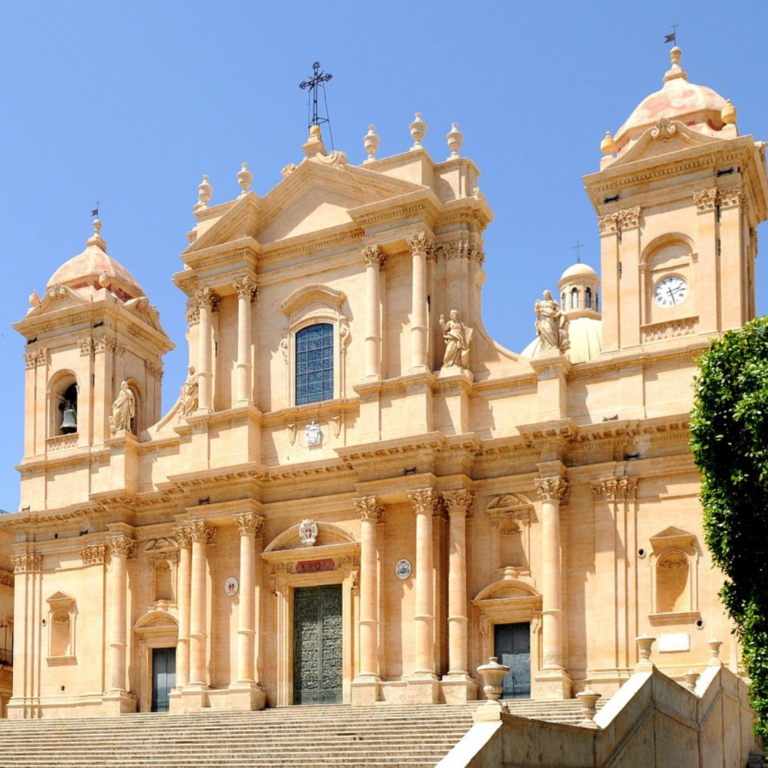
The iconic heart of Noto, the Cathedral of San Nicolò stands atop a majestic staircase, commanding attention from all who pass. The facade, with its Corinthian columns and intricate reliefs, is a testament to Sicilian craftsmanship. Inside, soaring arches and soft light create a serene and uplifting atmosphere.
After partial collapse in 1996 and years of meticulous restoration, the cathedral now stands as a symbol of resilience, echoing Noto’s own story of rebirth.
- Palazzo Nicolaci di Villadorata
Famous for its elaborate balconies, the palazzo is one of Noto’s most celebrated Baroque treasures. Stone cherubs, lions, and fantastical beasts seem to leap from the walls, showcasing both the skill and whimsy of Sicilian artisans. - Via Corrado Nicolaci and Infiorata Festival
Noto’s cultural vibrancy culminates each May during the Infiorata di Noto. Teams of artists transform Via Corrado Nicolaci into a breathtaking tapestry of floral mosaics, inspired by themes ranging from mythology to history. The festival is a modern embodiment of the Baroque spirit, combining spectacle, creativity, and communal celebration.
Why Noto Shouldn’t Be Missed
Noto is not just a city; it’s an experience. From its honey-hued stone that glows at sunset to the serene rhythm of life in its piazzas, Noto invites you to lose yourself in its beauty. It’s a place where art and architecture converge to create a timeless atmosphere, leaving visitors with a profound sense of awe.
Ragusa: The City of Contrasts
Two Souls, One City
Ragusa, perched on a hilltop overlooking deep valleys, is a city split in two. After the earthquake, debates arose among the survivors about where to rebuild. Some favored reconstructing in the old location, now known as Ragusa Ibla, while others moved to higher ground, creating Ragusa Superiore. These two distinct but interconnected towns offer contrasting visions of Baroque artistry.
Architectural Highlights
- Duomo di San Giorgio (Ragusa Ibla)
Designed by Rosario Gagliardi, this striking cathedral represents the dramatic flair of Sicilian Baroque. Its convex facade, flanked by spiraling columns and adorned with intricate sculptures, creates an irresistible pull. A walk up the sweeping staircase in front of the Duomo is an unforgettable pilgrimage into the heart of Baroque grandeur. - Giardino Ibleo
Nestled at the edge of Ragusa Ibla, this charming garden is a place of tranquility and beauty, offering panoramic views of the surrounding countryside. Its shaded paths and Baroque-inspired fountains capture the Sicilian ethos of harmony between nature and art. - Ragusa Superiore’s San Giovanni Battista Cathedral
While less dramatic than its Ibla counterpart, this cathedral embodies classical Baroque principles of symmetry and spatial grandeur. The interior, with its stunning altars and detailed frescoes, is a quiet celebration of Sicily’s artistic heritage.
A Living Tradition
Ragusa comes alive with festivals and events that honor its cultural roots. The Feast of San Giorgio, celebrated with processions, fireworks, and music, reflects the enduring interplay between faith and artistry that defines the city.
Modica: A Sweet Symphony of Baroque
Baroque Meets Chocolate
Known for its unique blend of architectural grandeur and delectable chocolate, Modica is a sensory paradise. Like Noto and Ragusa, Modica was rebuilt after the 1693 earthquake, transforming its steep hills and narrow streets into a showcase of Baroque elegance.
Iconic Landmarks
- San Giorgio Cathedral
The crowning jewel of Modica’s skyline, this cathedral climbs the hillside with its grand staircase, drawing the eye upward to its bell tower. Inside, the intricate stuccoes and frescoes create a celestial atmosphere that embodies the spiritual essence of Baroque art. - Chocolate Heritage
Modica’s chocolate-making tradition is as iconic as its architecture. Using a technique introduced by the Spanish, Modica’s chocolate retains a grainy texture and intense flavor. Festival-goers can learn about this heritage at the Chocolate Festival held every year, where the city’s Baroque streets are filled with the tantalizing aroma of cocoa. - Corso Umberto I
The bustling heart of Modica, this street is lined with Baroque palazzi, quaint cafes, and shops offering local delicacies. A stroll here is an opportunity to immerse yourself in the town’s architectural and culinary richness.
Baroque and Beyond
The Baroque legacy of Noto, Ragusa, and Modica transcends their magnificent facades. These cities are living testaments to human resilience, creativity, and the enduring power of beauty. From the vibrant festivals that fill the streets to the quiet moments of reflection in a sunlit piazza, the spirit of Baroque pervades every aspect of Sicilian life.
These towns invite you not just to visit but to feel. To walk among their grandiose churches and palaces is to touch history, to step into a world where tragedy gave birth to timeless art. And that, perhaps, is the greatest legacy of Sicilian Baroque.