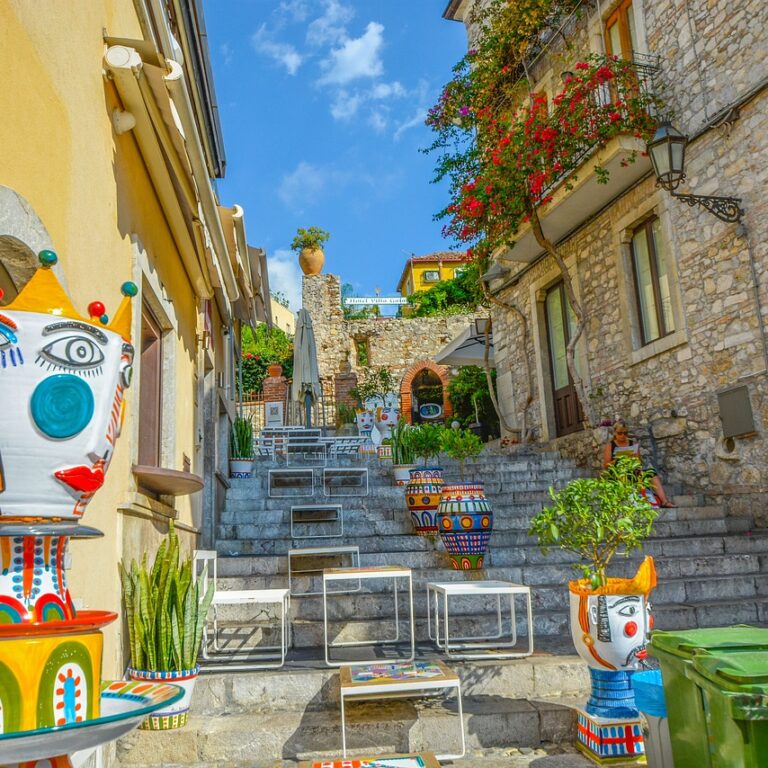
Sicily’s rich tapestry of history and culture is encapsulated in its famed ceramic art. From intricately painted planters to vividly tiled staircases, Sicilian ceramics are far more than mere ornaments; they are tangible expressions of the island’s heritage. Every brushstroke tells a story, capturing centuries of tradition, creativity, and cultural fusion. To hold a piece of Sicilian ceramic is to hold history in your hands – an enduring legacy passed down through generations.
This ancient art form has permeated every corner of Sicily, with its epicentre residing in the picturesque town of Caltagirone. Here, artisans continue to shape and paint clay in much the same way their ancestors did, producing pieces that are simultaneously traditional and contemporary. Whether you’re drawn by their vivid colours, intricate motifs, or cultural significance, Sicilian ceramics are a must-see for anyone visiting the island.
Join us as we explore the history, artistry, and shopping experience of Sicilian ceramics. This guide will show you how to appreciate and perhaps even take home a piece of this treasured craft.
Historical Overview
Ancient Beginnings
The art of ceramics in Sicily dates back thousands of years, to a time when early settlers harnessed the island’s abundant natural resources. Volcanic clay, sourced from Mount Etna’s fertile slopes, provided the perfect medium for primitive pottery making. Early Sicilian ceramics were rudimentary yet functional, with pots, jugs, and bowls serving as essential items in daily life.
It wasn’t long before the utilitarian gave way to the artistic. Influenced by the island’s successive waves of conquerors, Sicilian ceramics evolved into a unique blend of styles. The island’s position in the Mediterranean made it a cultural crossroads, and this is reflected in its ceramic art.
Key Historical Influences
- Arab Legacy
The Arabs, who ruled Sicily between the 9th and 11th centuries, had a profound impact on its ceramic craftsmanship. They introduced advanced pottery techniques, such as tin-glazing, which gave ceramics their distinctive lustre. Their geometric patterns and floral motifs, now synonymous with Sicilian style, originated during this period. - Norman and Spanish Periods
The Normans continued to foster Sicily’s ceramic traditions, embedding religious and courtly themes into the designs. Later, the Spanish rulers of the island brought with them influences from Andalusia, introducing vibrant colours such as cobalt blue and sunny yellows. These colours remain iconic elements of Sicilian ceramics today.
Over time, what began as simple olive oil jars and water jugs evolved into ornamental creations, from elaborate tiles to intricately painted plates. By the 17th century, Sicilian ceramics had garnered widespread acclaim, solidifying their place as one of the island’s most treasured art forms.
Caltagirone: The Heart of Sicilian Ceramics
A Town Steeped in Art
Nestled in the province of Catania, Caltagirone is a name synonymous with ceramic artistry. Walking through its cobbled streets, you’ll quickly see why. The town is a living gallery of ceramic art, with colourful tiles, murals, and sculptures adorning its walls and balconies. Everywhere you turn, you are met with the dazzling results of its long-standing ceramic tradition.
The Scala di Santa Maria del Monte
Caltagirone’s most iconic landmark is the Scala di Santa Maria del Monte, a grand staircase of 142 steps, each beautifully adorned with hand-painted ceramic tiles. Each riser tells a story, featuring patterns inspired by Sicily’s history, from Moorish arabesques to Baroque flourishes. Ascending the staircase is like walking through time, one tile at a time.
Artisans and Workshops
Caltagirone is home to a myriad of artisan workshops, where you can witness the magic of ceramic creation firsthand. Artisans sculpt and paint each piece individually, employing techniques passed down through generations. Notable studios include the Manuli workshop, famed for its traditional approach, and the Alessi family atelier, which adds a modern twist to classic styles. Visitors are often welcomed with open arms, with many studios offering demonstrations and bespoke commissions.
Traditional Motifs, Colours, and Patterns
The Testa di Moro Planters
No exploration of Sicilian ceramics is complete without encountering the testa di moro, or Moor’s head, planters. These striking sculptures, often in paired male and female forms, hold an intriguing story. Local legend tells of a Moorish merchant who fell in love with a Sicilian maiden. However, upon discovering his betrayal, she beheaded him and used his head as a planter for her basil. Today, these planters are a symbol of passion and beauty, their expressive faces gracing homes and gardens across Sicily and beyond.
Patterns and Colours
Sicilian ceramics are renowned for their bold colours and intricate designs.
- Colours
Vibrant yellows, blues, and greens dominate the palette, evoking the sun-drenched landscapes, azure sea, and lush vegetation of Sicily. These colours aren’t merely decorative; they are a tribute to the island’s natural beauty. - Motifs
Recurring motifs include lemon branches, olive leaves, and prickly pear cacti, reflecting Sicily’s agricultural riches. Geometric patterns and Baroque flourishes add a sense of sophistication. Religious imagery, such as depictions of saints or the Madonna, also appears frequently, a nod to the island’s strong Catholic heritage.
Shopping for Sicilian Ceramics
Where to Buy
While Caltagirone is the epicentre of ceramic craftsmanship, other towns also boast notable ceramic traditions.
- Santo Stefano di Camastra
Located in northern Sicily, Santo Stefano di Camastra is another must-visit for ceramic enthusiasts. Known as the “City of Ceramics,” this town offers a wide array of workshops and shops showcasing everything from tableware to decorative tiles. - Palermo and Taormina
Major cities like Palermo and Taormina also feature high-quality ceramic boutiques. These are convenient options if your itinerary doesn’t include a trip to Caltagirone or Santo Stefano di Camastra.
Tips for Purchasing
To ensure your purchases are authentic, consider the following tips:
- Visit trusted workshops and avoid mass-produced items. Authentic pieces are often signed by the artist or marked with the workshop’s logo.
- Ask about the production process; artisans are usually happy to explain how their ceramics are made.
- Keep your budget in mind. Handmade pieces can range from affordable plates to high-end vases and sculptures.
Factory Tours and Workshops
For a truly immersive experience, book a factory tour or workshop session. Some studios even offer short classes, where you can try your hand at painting your own piece under the guidance of an artisan.
Shipping and Care
If you’re worried about luggage space, many shops offer international shipping services. Once home, handle your ceramics with care. Use gentle cleaning methods and avoid exposing them to extreme temperature changes to preserve their beauty.
Connection to Sicilian Identity
Sicilian ceramics are more than decorative objects; they are threads in the fabric of the island’s identity. They reflect Sicily’s layered history and cultural resilience, bridging the gap between generations.
Everyday Use in Sicilian Homes
In Sicilian households, ceramics are omnipresent. Hand-painted tiles often serve as historical markers, depicting milestones like weddings or new homes. Ornamental plates and bowls grace dining tables during Sunday lunches, showcasing local cuisine in its rightful context.
Preserving Traditions
Ceramic workshops ensure that Sicily’s artisanal traditions stay alive in the face of global industrialisation. By purchasing these handcrafted items, you contribute to the preservation of a craft that defines Sicilian culture.
A Living Legacy of Art and Culture
Sicilian ceramics offer more than aesthetic appeal; they provide a tactile connection to the island’s rich cultural heritage. Whether you’re climbing the steps of Caltagirone’s Scala di Santa Maria, admiring the intricate patterns of a testa di moro, or shopping for your own piece of Sicilian artistry, you are experiencing a chapter of history brought to life.