Sicily, the dazzling gem of the Mediterranean, is more than a land of sunlit coasts and ancient ruins. Beneath its vibrant landscape lies an enduring legacy of artistic excellence. Among its most precious creations are the island’s fine jewellery and coral craftsmanship, where centuries of tradition merge with breathtaking design. From the vivid red coral of Trapani to the intricate filigree designs shaped by master goldsmiths, Sicilian jewellery offers more than adornment. It is a testament to the island’s spirit, a window into its layered history, and a celebration of its extraordinary natural beauty.
For visitors pursuing luxury, a piece of Sicilian jewellery is more than a souvenir; it is a timeless treasure imbued with stories and artisanal mastery. But how does one discover the finest creations? Where do ancient techniques meet modern sophistication? This in-depth guide will introduce you to Sicily’s iconic jewellery traditions, help you shop for authentic masterpieces, and uncover the intertwining of artistry and culture that defines this Mediterranean island.
The Art of Coral Jewellery in Trapani
A Storied Legacy
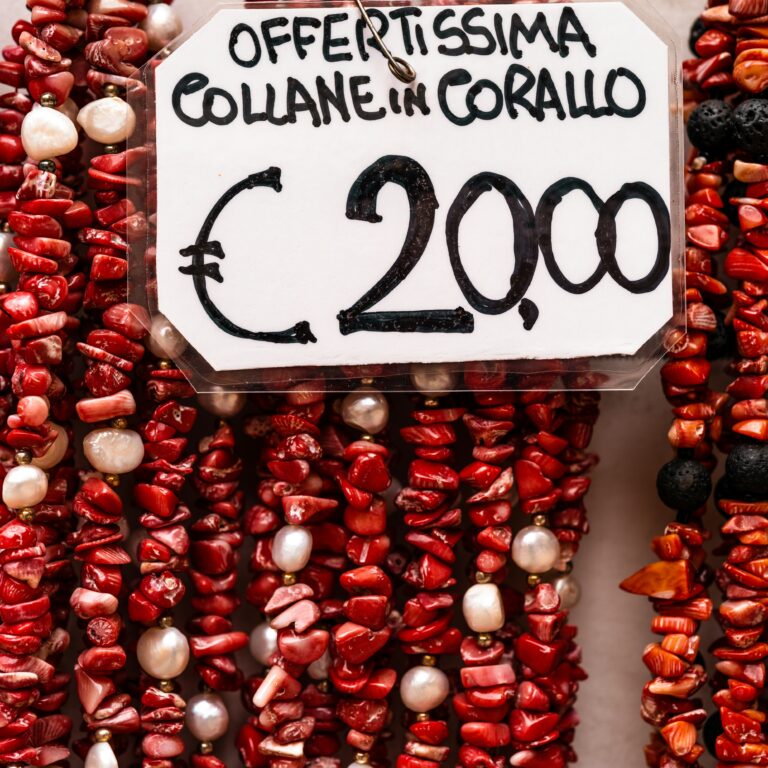
The seaside town of Trapani, perched on Sicily’s western coast, is synonymous with the art of coral jewellery. This tradition stretches back to the Middle Ages, when coral harvesting from local waters transformed the town into a hub for artisans. Known as “red gold,” Mediterranean coral (Corallium rubrum) was prized for both its vibrant scarlet hue and its association with protection and good fortune.
During Sicily’s Spanish rule in the 16th and 17th centuries, Trapani reached its pinnacle as a centre for coral craftsmanship. Workshops flourished as demand for intricate coral rosaries, religious figurines, and jewellery spread across Europe. Many pieces from this period survive in museum collections, showcasing the unmatched skill of Trapani’s artisans.
Unique Techniques
The creation of coral jewellery in Trapani is an art form rooted in tradition and patience. Artisans use techniques like carving, relief work, and inlay to fashion coral into captivating shapes. Each piece begins with raw coral fragments, hand-harvested from the Mediterranean seabed. These fragments are carefully polished to reveal their natural lustre before being transformed into exquisite designs.
One hallmark of Trapani’s coral work is its integration with precious metals. Gold and silver provide striking backdrops for coral medallions or beads. Some pieces also feature contrasting elements, such as pearls or turquoise, creating a harmonious balance of textures and colours.
Modern workshops in Trapani keep these techniques alive while introducing contemporary twists. Whether in traditional brooches or avant-garde necklaces, the mastery of coral craftsmanship endures.
The Symbolism of Coral
Coral holds a special place in Sicilian culture, steeped in symbolism and lore. Believed to have protective powers, coral jewellery was often worn as a talisman against the “malocchio” (evil eye). Mothers would gift coral amulets to their children as symbols of health and protection, while brides incorporated coral pieces into their trousseau to ensure a prosperous marriage.
Today, coral jewellery retains its mystical allure. Although less utilitarian in purpose, it symbolises connection—to the sea, to tradition, and to the island’s artistic soul. Pieces imbued with coral embody Sicily’s heritage, making them cherished keepsakes for travellers and collectors alike.
Sicilian Goldsmithing: Ancient Techniques and Modern Styles
A Timeless Craft
For centuries, Sicily’s goldsmiths have dazzled the world with their ingenuity and finesse. Influenced by the diverse civilisations that shaped Sicilian history—from the ancient Greeks and Romans to the Byzantine and Arab empires—Sicilian goldsmithing draws on a rich array of techniques and motifs.
Ancient Greek colonists introduced detailed engraving and repoussé methods, adorning gold with intricate narrative scenes. During the Roman era, Sicilian artisans became masters of encrustation, embedding jewellery with colourful gemstones. The Byzantine period saw the rise of religious iconography in goldsmithing, with cross pendants and medallions reflecting the island’s faith and artistry.
Modern Artistry
Today, Sicilian jewellers combine these ancient techniques with innovative styles, creating pieces that honour the past while appealing to contemporary tastes. Artisans often use filigree work, a delicate technique involving fine threads of gold or silver twisted into elaborate patterns. This method is particularly popular for earrings, necklaces, and intricate rings reminiscent of the golden age of Sicily.
Sicilian jewellery also embraces materials sourced from the island’s unique environment. Lava stone from Mount Etna, for instance, is turned into striking rings or pendants, often paired with gold to create a captivating contrast. Pearls harvested near Trapani add softness and elegance to many designs, while colourful gemstones like amber and garnets enhance the Mediterranean aesthetic.
Bespoke design services have grown increasingly popular, allowing clients to work alongside master jewellers to craft one-of-a-kind pieces. Whether inspired by historical motifs or modern minimalism, these bespoke creations capture the essence of Sicily in wearable form.
Shopping for Authentic Sicilian Jewellery
Identifying Genuine Pieces
When shopping for Sicilian jewellery, authenticity is paramount. Here are key tips to ensure you invest in genuine handcrafted treasures:
- Look for Certifications
Authentic coral jewellery often comes with certifications verifying the source of the coral (Corallium rubrum). These documents ensure that the pieces are crafted with high-quality, sustainably harvested materials. - Examine the Craftsmanship
Handcrafted jewellery is distinguishable by its artistry. Irregularities in patterns or subtle imperfections often indicate the human touch, while mass-produced items lack the character of handmade designs. - Know Your Retailer
Reputable boutiques and workshops specialising in Sicilian jewellery often display the names of their artisans, along with their credentials. Family-run businesses with a multi-generational reputation are particularly trustworthy. - Ask for Provenance
Don’t hesitate to ask about the origin of materials, especially for coral or lava stone pieces. Genuine retailers are transparent about sourcing and production methods.
Luxury Boutiques and Artisan Workshops
Sicily’s key cities and coastal towns are brimming with opportunities for jewellery shopping. Some notable destinations include:
- Palermo
Palermo’s historical quarters house elegant boutiques offering both traditional and contemporary designs. Look out for shops specialising in filigree jewellery or bespoke goldsmithing services. - Catania
Catania, known for its proximity to Mount Etna, is the ideal place to shop for jewellery incorporating lava stone. Artisan workshops here often display creative designs that blend volcanic textures with glowing metals. - Taormina
A haven for luxury shopping, Taormina boasts high-end boutiques with extensive collections of coral and gemstone jewellery. Strolling through the town’s charming streets offers plenty of opportunities to discover unique pieces. - Trapani
For coral enthusiasts, Trapani remains the ultimate destination. Here, workshops dedicated exclusively to coral jewellery highlight the town’s singular contribution to this art form.
Commissioning Bespoke Pieces
For those seeking a personal touch, many Sicilian artisans offer customisation services. Commissioning a bespoke piece allows you to choose specific materials, motifs, and styles that resonate with your vision. Some workshops even invite clients to participate in the design process, ensuring their jewellery becomes a deeply personal expression of their connection to Sicily.
Connection to Sicily’s Artistic Heritage
A Reflection of History
Jewellery and coral craftsmanship are more than trades in Sicily; they are living embodiments of the island’s history and culture. Each gold bracelet or coral pendant whispers stories of diverse rulers, artistic eras, and the natural bounty that defines Sicily.
For example, coral amulets worn during religious festivals echo ancient practices, while filigree necklaces inspired by Byzantine designs reflect Sicily’s crossroads of faiths. These timeless adornments are more than accessories; they are tangible pieces of Sicilian identity.
Celebrating Craftsmanship
Even today, jewellery plays a significant role in Sicilian celebrations. During local festivals such as Santa Rosalia in Palermo, women adorn themselves with coral earrings, gold medallions, and other heirlooms passed down through generations. These moments highlight the enduring beauty of Sicilian artistry and its place in the island’s customs.
A Legacy of Artistry and Mediterranean Soul
Investing in Sicilian jewellery is not just about acquiring a beautiful adornment; it’s about cherishing a piece of history, supporting artisan traditions, and celebrating the soul of the Mediterranean. Sicily’s coral jewellery and goldsmithing heritage are unmatched in their artistry, offering treasures that endure through time.