Every corner of Sicily tells a story, and nowhere is this more evident than in its culinary creations. While its savoury dishes are famous worldwide, it’s the island’s desserts that truly capture the imagination. From vibrant cassata to refreshing granita, Sicilian desserts are a celebration of history, culture, and indulgence. Each sweet treat reflects the island’s multicultural past, with influences from Arab, Greek, Norman, and Spanish cuisines coming together in a unique harmony of flavours.
For Sicilians, desserts are more than just a moment of sweetness after a meal – they are an essential part of daily life, a symbol of hospitality, and a way to mark life’s most joyous occasions. Whether you’re wandering through a bustling market in Catania or savouring a traditional pastry in a quiet Palermo café, the allure of Sicilian desserts is impossible to resist.
Dive into the rich tapestry of Sicily’s sweet traditions as we explore its iconic desserts, the cultural roots that inspire them, and the artisans who keep these confectionary masterpieces alive.
The Role of Sweets in Sicilian Culture
Sweets hold a sacred place in Sicilian culture, and their role goes far beyond mere indulgence. They serve as symbols of celebration, community, and tradition – an offering during religious festivities, a token of hospitality for guests, and a way to bring families together around the table.
A Sweet Tradition at Celebrations
Religious and festive celebrations in Sicily provide the perfect showcase for the island’s array of desserts. During Easter, you’ll find marzipan lambs adorned with intricate designs, while Christmas brings forth an abundance of mostaccioli – honey-flavoured, spiced pastries. Saint Rosalia’s Feast Day in Palermo features an array of cannoli and cassata, proudly displayed in bakery windows like works of art.
Sweets also play a critical role in marking life’s milestones. Weddings often include a stunning dessert table, or “confettata,” featuring intricately wrapped sugared almonds and other confections. At birthdays, cassata Siciliana takes centre stage, its vibrant colours reflecting the joy of the occasion. Even mourning rituals can involve the sharing of simple, symbolic pastries such as biscotti dei morti to honour loved ones.
Sweets, Community, and Hospitality
To a Sicilian, sharing sweets is an act of kindness and connection. When you visit someone in Sicily, it’s common to be welcomed with a plate of pastries, a gesture of hospitality steeped in tradition. To refuse this gesture would almost be unthinkable.
Family and community are at the heart of Sicily’s sweet traditions. Recipes are often passed down through generations, cherished as family heirlooms. Baking together is an opportunity to bond with loved ones, and even among neighbours there’s a sense of friendly competition over who makes the best cannoli or granita.
Iconic Sicilian Desserts
Cassata – The Queen of Sicilian Cakes
Cassata Siciliana is Sicily’s most elaborate and visually stunning dessert. Traditionally served during Easter but available year-round, cassata is a ricotta-filled sponge cake layered with candied fruit, marzipan, and icing. Its flavours are as bold as its appearance, with the rich sweetness of ricotta balanced by zesty citrus notes.
Legend has it that the Arabs brought the original recipe for cassata to Sicily, introducing sugar and citrus to local cuisine. Over time, Sicilians adapted the cake into the colourful masterpiece we see today, incorporating influences from Norman and Spanish pastry traditions.
Cassata’s intricate design often reflects the creativity of the pastry chef. Look closely, and you’ll see delicate patterns of pistachio-green marzipan or jewel-like arrangements of candied fruit, turning each cassata into a unique piece of art.
Cannoli – A Crisp Tube of Joy
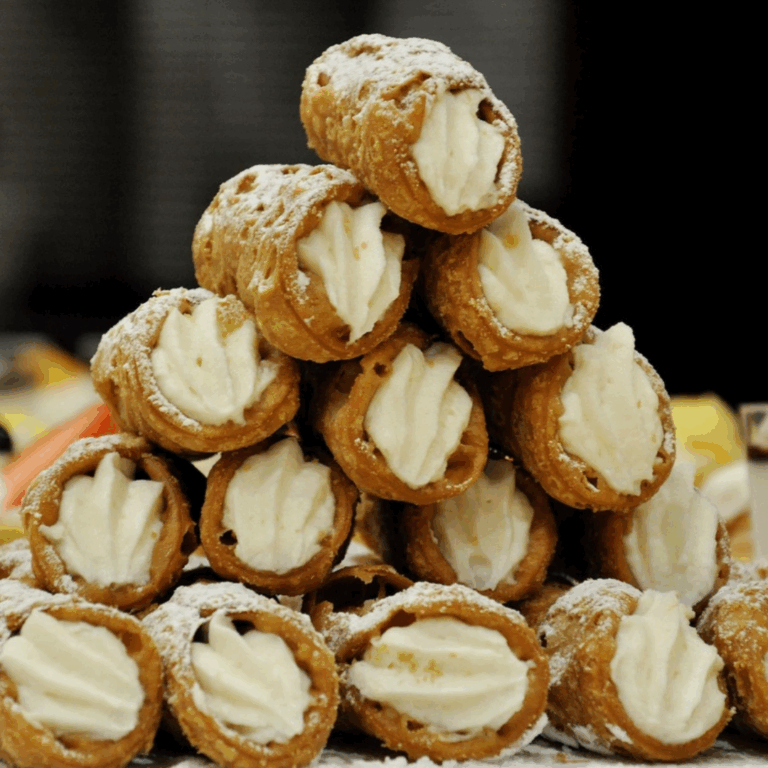
No discussion of Sicilian desserts would be complete without the iconic cannolo. Originating in Palermo, these crispy pastry tubes filled with sweetened ricotta cheese are perhaps Sicily’s most famous export.
Cannoli’s origins are tied to Carnevale, the pre-Lenten festival, where indulgence took centre stage. Over the centuries, the dish became a year-round treat. Traditional cannoli are flavoured with orange peel, pistachios, or chocolate, but modern versions have introduced playful variations with exotic toppings and fillings.
The secret to a perfect cannolo lies in the balance of textures. The shell must be thin and shatteringly crisp, while the ricotta filling should be lusciously smooth, with just the right hint of sweetness. Any visit to Sicily simply isn’t complete without trying one.
Granita and Brioche – A Morning Ritual
Granita, a semi-frozen dessert made with sugar, water, and bold flavours like almond, lemon, or coffee, offers a refreshing treat perfect for hot Sicilian summers. While it might seem simple, achieving the perfect granular texture requires skill and patience.
When paired with a soft, buttery brioche bun, granita becomes the ultimate breakfast indulgence for locals. Sitting at a seaside café in Taormina or Aci Trezza with this duo in hand is an essential Sicilian experience.
Arab Heritage and Sweet Inspirations
The Arab influence on Sicilian desserts cannot be overstated. Arriving in Sicily in the 9th century, the Arabs introduced revolutionary ingredients like sugar, almonds, citrus fruits, cinnamon, and honey – many of which remain staples of Sicilian pastry-making today.
Marzipan and the Art of Frutta Martorana
Perhaps the most iconic Arab-inspired dessert is frutta martorana, mimicking the appearance of fruits but crafted entirely from sweet almond paste. This marzipan delicacy originated in convents, where nuns would sculpt them by hand as offerings or decorations during religious celebrations.
Today, frutta martorana is synonymous with Sicilian craftsmanship, and its vibrant colours and lifelike shapes continue to fascinate visitors.
Honey-Soaked Pastries
Honey, one of the Arabs’ most significant culinary gifts to Sicily, shines in desserts like giuggiulena and pignolata. Giuggiulena combines sesame seeds and honey to create a crunchy, nougat-like bar, while pignolata marries fried dough with a glossy honey glaze. Both are Christmas favourites.
The use of honey in these desserts pays homage to Sicily’s Arab past while highlighting the Sicilian talent for adapting external influences into something uniquely their own.
A Pastry Chef’s Perspective
Speaking to a Sicilian pastry chef provides a deeper appreciation for these beloved desserts. Stefano Conti, a master pastry chef in Palermo, explains, “Traditional Sicilian desserts are not just recipes; they are expressions of love, culture, and memory.”
Stefano, whose family has run a pastry shop for over a century, specialises in using time-honoured methods to create modern confections. “Here in Sicily, we still hand-fill every cannolo and use fresh ricotta from local dairies,” he notes. “It’s time-consuming, but it’s the only way to preserve the authenticity.”
He also shares a tip for home bakers eager to replicate Sicilian flavours. “Invest in quality ingredients. True Sicilian pistachios, like those from Bronte, or freshly zested Sicilian lemons will make all the difference.” The passion and pride Stefano exudes for his craft are shared by countless artisans across Sicily, each striving to keep this sweet legacy alive.
Why Sicilian Desserts Captivate the World
The global appeal of Sicilian desserts is undeniable. Renowned for their vibrant presentation and bold, balanced flavours, these confections have found fans far beyond the island. Desserts like cannoli and cassata have made their way onto menus across the world, while marzipan creations and granita inspire awe for their artistry and simplicity.
What makes Sicilian desserts truly stand out is their storytelling power. Each treat reflects a piece of the island’s soul, from its fertile lands to its multicultural history. They are as much about heritage as they are about pleasure.
Sicily’s desserts are best experienced where they were born. Book a culinary tour focused on the island’s pastry heritage, or sign up for a hands-on cooking class where local chefs will teach you to make cannoli and cassata from scratch. A visit to iconic pastry shops, like the historical Antica Focacceria San Francesco in Palermo, promises to be equally unforgettable.